
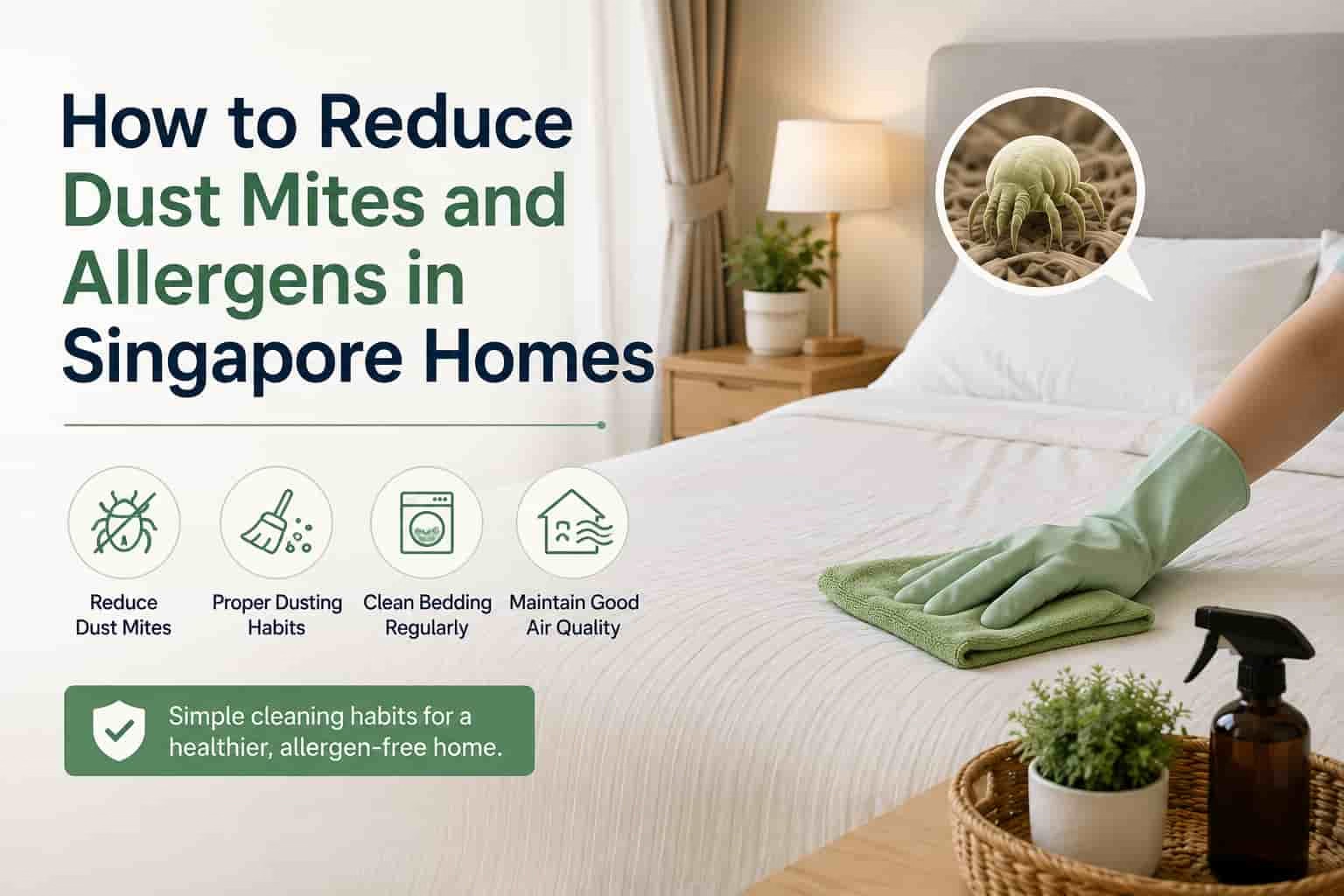
Many households in Singapore follow strict cleaning routines. They mop floors, wipe down kitchen countertops, and tidy up common areas every week. Yet, even in a home that looks completely spotless, family members might still wake up with sneezing fits, itchy skin, or a persistent runny nose.
When invisible health triggers persist in a visibly tidy room, the issue rarely stems from obvious clutter. Instead, the true culprits are microscopic biological allergens—primarily dust mites—that thrive on accumulated fine ambient dust.
In Singapore’s naturally warm climate, managing these microscopic pests does not require specialized industrial treatments or professional sanitization. Instead, it relies on consistent, strategic household hygiene and proper dusting techniques during your regular general cleaning routines.
Where Dust and Allergens Accumulate in Singapore Homes
Unlike larger household pests, dust mites are entirely invisible to the naked eye. They do not bite or sting. Instead, the microscopic proteins found in their waste particles and decaying fragments are what trigger respiratory and skin sensitivities for individuals dealing with asthma or eczema.
Dust mites feed primarily on microscopic dead skin cells shed by humans and pets. Because of this, certain areas of an apartment naturally accumulate higher concentrations of these organic food sources and fine ambient dust over time:
Bedroom Floor Hotspots: The spaces underneath beds, behind bedside tables, and along baseboards are prone to collecting heavy “dust bunnies” made of hair, lint, and skin flakes.
Low-Traffic Corners: Areas behind doors, television consoles, and large wardrobes trap stagnant air and fine ambient dust that standard quick sweeps often miss.
Open Horizontal Surfaces: Window ledges, open shelving units, and electronic appliances continuously collect settling particles from the air.
The Importance of Proper Dusting Habits
A common reason why allergy symptoms persist even after a thorough tidying session is the use of improper dusting methods. Traditional cleaning habits, such as using a dry feather duster or sweeping aggressively with a standard broom, are actually counterproductive.
Dry sweeping simply launches settled dust particles back into the air. Once airborne, these microscopic particles can float for hours before settling back onto your floors and beds.
To safely lower the allergen load in an enclosed flat, your domestic cleaning routines must focus on trapping dust rather than moving it around. For busy households struggling to maintain this level of detailed dust control alongside a hectic work schedule, booking a professional house cleaning service Singapore ensures that floors, baseboards, and hard surfaces are thoroughly and systematically cleaned using proper containment methods.
Simple Cleaning Habits to Manage Indoor Allergens
Reducing allergens during your routine housekeeping requires a deliberate, step-by-step approach. Incorporating these specific techniques into your regular chores will significantly cut down on indoor triggers:
Damp Wiping Over Dry Dusting: Always use a slightly damp microfiber cloth when wiping down hard surfaces like window sills, shelving, and bed frames. The moisture physically binds the fine dust to the cloth, preventing it from becoming airborne.
Top-to-Bottom Cleaning Sequence: Always clean a room from the highest surface down to the floor. Dust ceiling fans, aircon louvers, and high shelves first, allowing any escaped particles to fall to the floor before you vacuum and mop.
Slow, Deliberate Vacuuming: When vacuuming bedrooms and living areas, move the vacuum head slowly in overlapping straight lines. Running a vacuum too quickly over the floor fails to create the sustained seal needed to draw fine dust out of flooring grooves and corners.
Regular High-Temperature Bedding Rotations: Strip bedsheets, pillowcases, and mattress protectors weekly. Wash them in hot water of at least 60°C, which can help reduce dust mite populations and remove allergen residues from bedding.
Because dust and skin flakes accumulate continuously every single day, keeping these allergens at bay requires absolute consistency. Setting up a dedicated weekly house cleaning service ensures that these core dust-prone areas are thoroughly managed on a fixed schedule, keeping indoor air quality stable.
Air Circulation and Home Layout
While localized floor and bedroom cleaning is vital, the overall environment of the apartment dictates how quickly household dust can accumulate.
In Singapore, outdoor humidity is consistently high, often exceeding 80%. Because dust mites thrive in humid, stagnant environments, relying on wide-open windows to clear out a room can inadvertently introduce more moisture and outdoor dust into the flat. Instead, utilizing air conditioning in dry mode or running a dedicated dehumidifier helps maintain a less hospitable environment for biological allergens.
Furthermore, minimizing open storage is highly effective. Keep books, decorative items, and toys stored inside closed cabinets or plastic bins rather than on open display racks. This limits the number of horizontal surfaces that can trap ambient dust, making your standard maintenance significantly faster and more efficient.
If you are dealing with a major living transition—such as handing over a rental unit back to a landlord—standard surface dusting is rarely enough to pass a strict property inspection. Opting for a professional move out cleaning service guarantees that accumulated dust behind heavy appliances, inside empty built-in wardrobes, and along high fixtures is fully cleared out.
Preparing a Space Before Moving In
Controlling household allergens is an ongoing process of prevention. When taking over a new property, starting with a clean baseline makes managing allergens much easier in the future.
Empty properties that have sat vacant for weeks or months often collect a thick layer of fine architectural dust and airborne debris. If you are preparing to settle into a new apartment, arranging a thorough move in cleaning service allows you to completely clear out stagnant dust from interior cabinets, window tracks, and flooring before your furniture arrives.
For those who simply want to establish a fresh baseline for their current property—whether after a period of neglect or right before a major family event—a comprehensive one time house cleaning provides a thorough, deep reset of all floors, surfaces, and hidden corners, making it much easier to maintain a low-allergen home moving forward.
FAQ
1. What causes dust mites in Singapore homes?
Dust mites thrive in warm and humid environments and feed on microscopic skin flakes shed by humans and pets. In Singapore, high humidity levels can create favorable conditions for dust mites to multiply, especially in bedrooms, carpets, bedding, and dusty corners that are not cleaned regularly.
2. Can regular house cleaning reduce dust mites?
Yes. Regular house cleaning helps remove dust, skin flakes, and other organic debris that dust mites rely on as a food source. Consistent vacuuming, damp dusting, mopping, and washing bedding can help reduce the overall dust mite population in a home.
3. How often should bedding be washed to reduce allergens?
Bedsheets, pillowcases, and mattress protectors should ideally be washed once a week. Washing bedding in water at 60°C or higher can help reduce dust mite populations and remove allergen residues that accumulate over time.
4. Why do allergy symptoms continue even when a home looks clean?
A home may appear clean while still containing microscopic dust particles and allergens that are invisible to the naked eye. Dust can accumulate under furniture, behind appliances, inside wardrobes, and on elevated surfaces, contributing to ongoing allergy symptoms despite regular tidying.
Related Articles To Read
- 9 Haze Season House Cleaning Tips for Singapore Homes
- How to Prevent Mold and Musty Smells in Singapore Wardrobes
- 30 Minutes Cleaning Reset for Busy Singapore Homes
- 9 Weekly House Cleaning Tips That Actually Save Time in Singapore Homes
- 10 Important Things to Do Before Moving Into a New Home in Singapore