
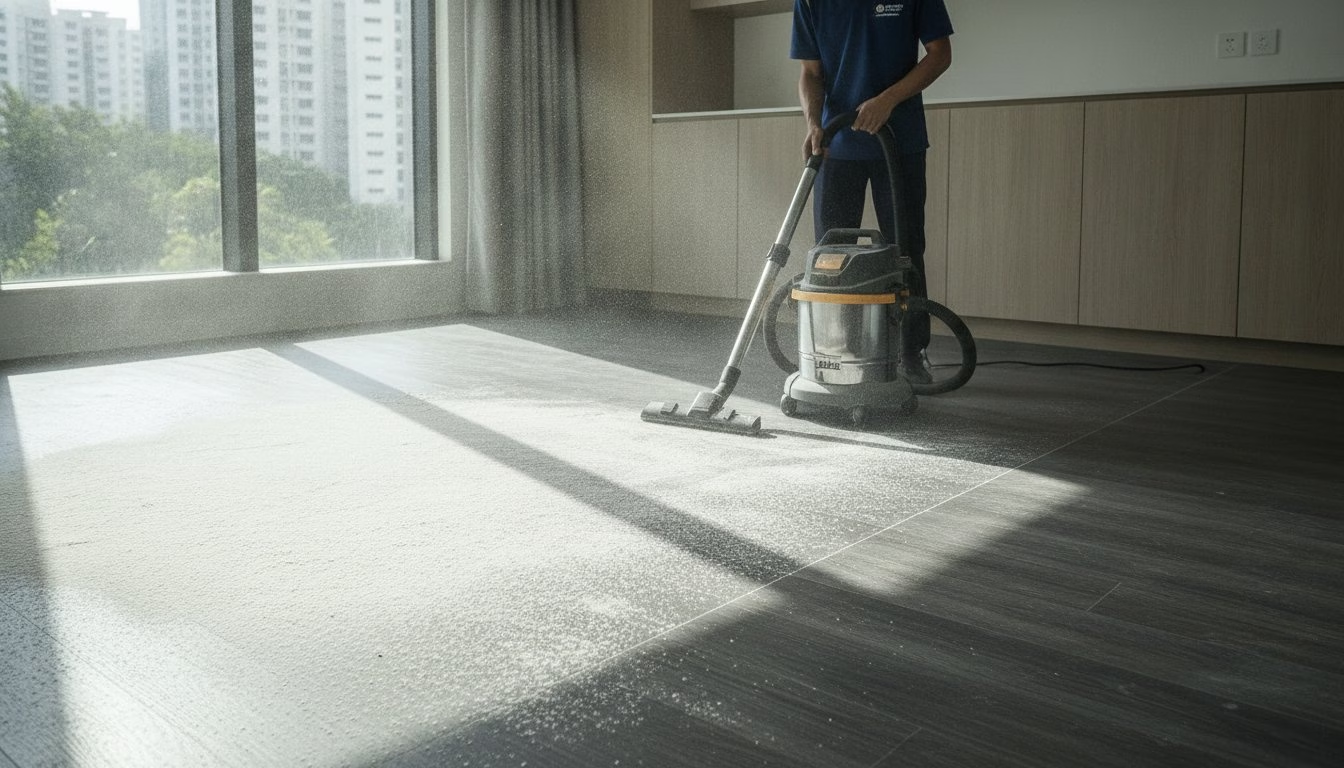
Why does a layer of fine white powder reappear on your floors even after you’ve mopped them three times? It’s incredibly frustrating to see brand-new built-in cabinets and expensive vinyl flooring covered in a persistent grit that just won’t go away. You’ve likely invested months into your dream home, only to find that fine silica dust is triggering allergies or threatening to scratch your pristine finishes. We understand that you want a space that’s truly ready for your family, not a construction site in disguise.
Professional renovation dust cleaning singapore requires a specialized approach because construction particles like cement and drywall dust are microscopic and highly abrasive. In this article, you’ll discover why standard household tools often fail to tackle these contaminants and how to effectively decontaminate your space for a safe, move-in ready environment. We’ll walk you through the systematic extraction process needed to protect your expensive renovation finishes and ensure your indoor air quality is pristine before you unpack a single box. Achieving a home where you can finally walk barefoot without feeling a single grain of grit is possible when you follow a methodical, industrial-grade approach.
Key Takeaways
- Understand how Singapore’s high humidity interacts with microscopic silica and cement particles to create a persistent layer of grit that standard cleaning cannot resolve.
- Discover why traditional mopping and standard household vacuums often fail by either spreading “cement milk” or recirculating fine dust back into your living space.
- Learn the importance of the 48-hour rule for dust settlement to ensure your renovation dust cleaning singapore is performed at the optimal time for lasting results.
- Identify critical hidden areas, such as internal built-in carpentry and high-level surfaces, that must be addressed to protect your family’s respiratory health.
- Gain clarity on the differences between a contractor’s general handover and a professional deep clean to ensure your new home is truly barefoot-friendly.
The Science of Renovation Dust in Singapore Homes
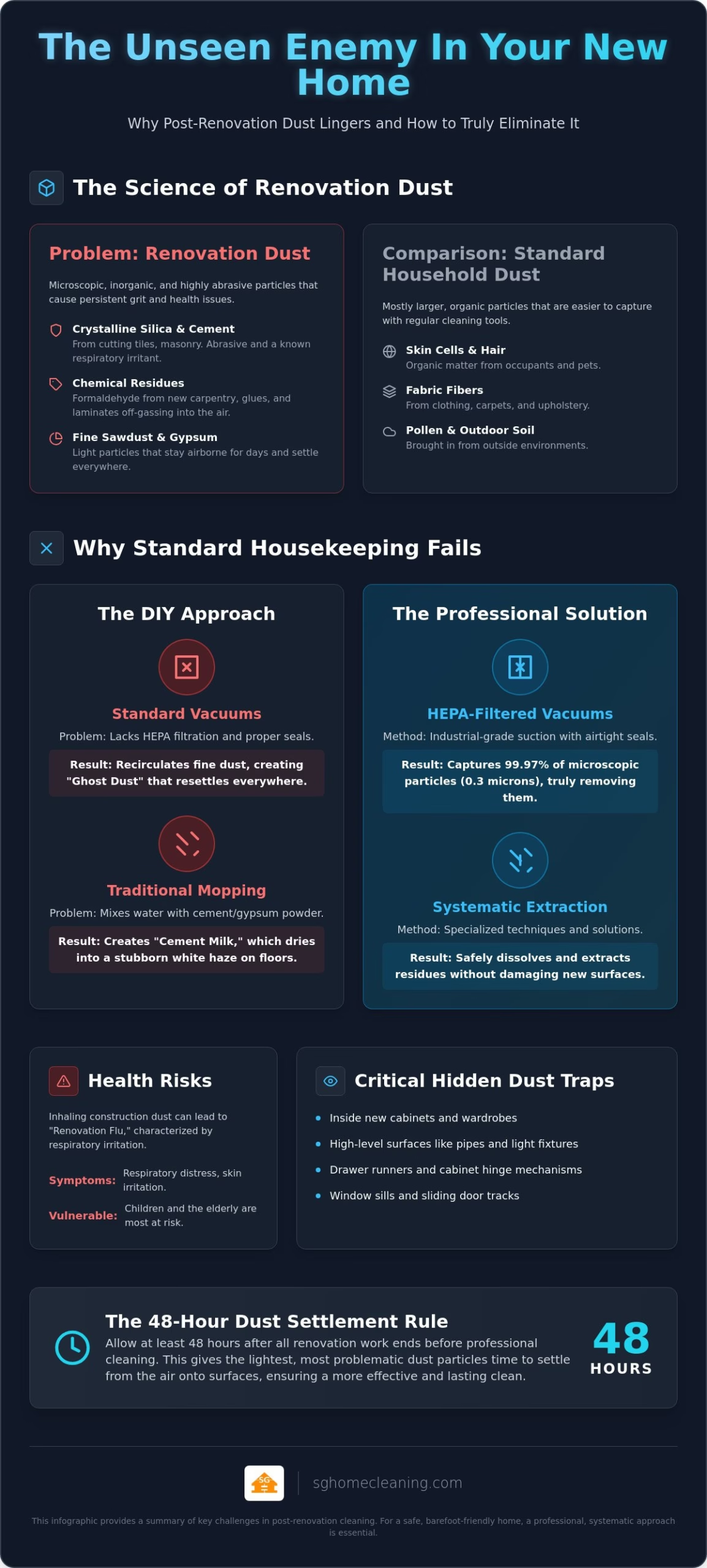
Renovation dust isn’t just a nuisance; it’s a complex chemical cocktail. While standard household dust mostly consists of organic matter like skin cells and fabric fibers, construction debris is composed of inorganic materials like cement, silica, gypsum, and fine wood particles. Understanding The Science of Renovation Dust helps explain why it’s so difficult to remove. These particles are often smaller than 10 microns. That’s microscopic. Because they’re so light, they stay airborne for days, settling slowly into every corner of your new home long after the contractors have left.
Singapore’s unique climate adds another layer of difficulty. Our high humidity doesn’t just make us feel warm; it makes post-construction dust “sticky.” When moisture in the air interacts with fine cement or gypsum powder, it creates a subtle bond with your new surfaces. This is why a simple wipe-down often leaves a hazy, white residue. Effectively managing renovation dust cleaning singapore requires breaking this bond without damaging your expensive new finishes. It’s a meticulous process that goes far beyond basic housekeeping.
Common Contaminants Found After a Singapore Home Reno
During a typical HDB or condo overhaul, several specific pollutants emerge. Crystalline silica is perhaps the most concerning. It’s produced when contractors cut tiles, stone, or masonry. It’s a known respiratory irritant that can linger in the air for a long time. Additionally, new built-in wardrobes and kitchen cabinets often release formaldehyde and chemical residues from glues and laminates. Fine sawdust from on-site carpentry is equally problematic. It wedges itself into drawer runners and hinge gaps where standard tools simply can’t reach. These contaminants don’t just look messy; they’re chemically active and abrasive.
Health Risks of Post-Construction Particles
Ignoring these microscopic particles can lead to what many locals call “Renovation Flu.” This isn’t a virus, but rather a physical reaction to poor indoor air quality. Children and the elderly are particularly vulnerable to respiratory distress when inhaling these abrasive materials. Beyond breathing issues, the grit can cause significant skin irritation if it’s left on surfaces. Imagine walking on microscopic shards of glass; that’s essentially what construction grit feels like to sensitive skin. Ensuring a thorough renovation dust cleaning singapore is essential for protecting your family’s long-term well-being. You shouldn’t move into a home that makes you feel unwell.
Why Standard Housekeeping Fails Against Construction Debris
Many homeowners are baffled when they mop their new floors three times, only to find a thin white film returning the next morning. This is the “Ghost Dust” phenomenon. It happens because standard cleaning tools aren’t designed for the unique properties of construction debris. When you attempt DIY renovation dust cleaning singapore, you’re often fighting a losing battle against particles that are too fine for consumer-grade equipment to handle. The result is a cycle of frustration where the home never feels truly clean.
The recirculation problem is the primary culprit. Standard household vacuums usually lack the airtight seals and medical-grade filters required to trap microscopic silica. Instead of removing the dust, these machines suck it in and blow the finest particles back out through the exhaust. This essentially “paints” your walls and ceilings with a fresh layer of contaminants every time you vacuum. Mopping presents a different challenge. Traditional cotton mops often just hydrate cement and gypsum powder, creating a slurry known as “cement milk.” As the water evaporates, it leaves behind that characteristic white haze on your expensive tiles and parquet.
Equipment Limitations: HEPA vs. Standard Vacuums
Capturing particles as small as 0.3 microns requires industrial-grade suction and specialized filtration. HEPA filtration is a high-efficiency particulate air standard that captures at least 99.97% of particles that are 0.3 microns in size. Without this level of precision, you’re simply moving dust around. Industrial wet/dry vacuums are also essential for extracting heavy sediment from floor tracks and window sills where fine grit accumulates. This level of rigor aligns with the seriousness seen in Singapore’s workplace safety regulations regarding dust management and worker protection.
The Danger of DIY Cleaning on Delicate Finishes
Construction grit is highly abrasive. Using a standard rag or a coarse sponge can permanently scratch new quartz countertops or vinyl flooring. These micro-scratches dull the finish and create pockets where future dirt can hide. Additionally, standard household chemicals can sometimes react poorly with fresh paint or specialized floor sealants that haven’t fully cured. Professional renovation dust cleaning singapore utilizes specialized microfibre technology and pH-neutral solutions to attract dust without the need for aggressive scrubbing. If you’re concerned about preserving your home’s new finishes, it’s often safer to consult a specialist about a systematic deep clean before you begin unpacking your belongings.
Key Areas Often Missed During Post-Renovation Cleaning
A successful cleaning strategy follows a strict top-down hierarchy. If you begin with the floors, you’ll find yourself cleaning them repeatedly as gravity pulls microscopic particles from higher elevations. High-level surfaces, such as the tops of kitchen cabinets and ceiling fan blades, are the most common oversight in DIY renovation dust cleaning singapore. These areas act as reservoirs that redistribute dust every time a breeze passes through the room. You must clear these heights first to prevent the constant re-contamination of your living space.
Internal built-in carpentry is another critical zone that requires meticulous attention. While the exterior of your new wardrobes might look pristine, the interiors often harbor “static” dust. This fine powder clings to the vertical laminate surfaces due to the friction created during installation. Sliding door grooves and window tracks are also primary collection points for heavy grit. If this abrasive sediment isn’t extracted, it can grind against the rollers, leading to permanent mechanical damage and unsightly scratches on your new tracks. Even your electrical outlets and switches aren’t immune; fine dust often settles inside the faceplates, creating a potential fire hazard if left unaddressed.
The Hidden Traps: Cabinet Hinges and AC Vents
Mechanical components are frequently neglected during a standard wipe-down. Dust that settles inside cabinet hinges can mix with factory lubricants, creating a gritty paste that leads to squeaking and premature wear. It’s also vital to clean your air conditioning filters and internal fins before the first switch-on. If you don’t, the system will immediately blast construction contaminants throughout your home. In homes with false ceilings, light troughs can create a “dust rain” effect. As the LED strips heat up, they create convection currents that lift settled dust and drop it back onto your furniture.
Walls and Ceilings: The Vertical Dust Reservoirs
Walls and ceilings hold more dust than most homeowners realize. Static electricity keeps these particles attached to vertical surfaces, even when they appear clean to the naked eye. Dry-wiping walls with specialized microfibre tools is an essential first step before any wet cleaning begins. If you apply water too early, you’ll simply create streaks of mud that are harder to remove. Finally, don’t forget the narrow gaps where false ceilings meet the main walls. These recesses are magnets for fine silica and require high-reach extraction tools to ensure a truly comprehensive renovation dust cleaning singapore experience.
Planning Your Post-Renovation Cleaning Strategy
Timing is the most critical element of a successful move-in. Many homeowners rush to book their cleaning the moment the last tile is laid, but this often leads to wasted effort and disappointment. To achieve a truly grit-free environment, you must implement a strategic waiting period. A well-planned renovation dust cleaning singapore schedule ensures that you aren’t paying for a service that will be undone by settling particles just hours later. It’s about working with the physics of your home, not against it.
Timing Your Clean: The Settling Period
The 48-hour rule is a standard industry recommendation for a reason. After final sanding, hacking, or carpentry work, microscopic particles remain suspended in the air for a significant amount of time. If you clean immediately, these particles will simply land on your freshly wiped surfaces once the air becomes still. Air movement from ceiling fans or air conditioning units can prolong this suspension, keeping contaminants in flight longer than expected. Professional cleaning should be the very last step before furniture move-in to ensure no new dust is introduced to the environment. This window allows the indoor atmosphere to stabilize, making the extraction process far more effective and permanent.
Managing Your Contractor’s Initial Cleanup
It’s important to distinguish between a contractor’s “general handover” and a professional deep clean. Most renovation contracts include a basic cleanup, which typically involves removing large debris, protective floor coverings, and a basic sweep. You should ensure the floor is “broom clean” and all construction tools are removed before your specialized team arrives. For a detailed look at what a comprehensive service entails, you can refer to our guide on Post Renovation Cleaning Singapore. This clarity prevents overlapping work and ensures your cleaning budget is spent on high-level decontamination rather than simple trash removal. It’s a matter of operational efficiency.
Before your cleaning team arrives, take a moment to prepare the space. Ensure all built-in cabinets are empty and that any remaining protective plastic on appliances has been removed. When selecting a provider, ask specific questions about their equipment. Do they use HEPA-filtered vacuums? Are their cleaners trained in handling delicate Singaporean home finishes like quartz or engineered wood? A disciplined approach to these details will save you time and protect your investment. If you’re ready to schedule your move-in, you can speak with our team to coordinate the best timing for your handover.
Achieving a Dust-Free Move-In with SG Home Cleaning
Transitioning from a construction site to a comfortable home requires more than just a quick sweep. It demands a systematic decontamination process designed to handle the unique environmental challenges found in Singapore. At SG Home Cleaning, we approach renovation dust cleaning singapore with a focus on consistency and high standards. We understand that your new home represents a significant investment of time and resources. Our goal is to provide a sense of order and competence, ensuring that your move-in experience is as smooth and stress-free as possible.
Our team consists of locally trained cleaners who possess an intimate understanding of Singaporean residential layouts. Whether you’re moving into a compact 3-room HDB or a sprawling multi-story condominium, we know exactly where dust hides in standard built-in wardrobes, kitchen cabinetry, and specialized window systems. This local expertise allows us to work efficiently without compromising on the thoroughness required for a post-construction environment. We don’t just clean; we restore your home to a state of pristine readiness.
Our Specialized Post-Renovation Scope
We operate with a transparent and disciplined scope of work so you know exactly what to expect from your session. Our process includes deep vacuuming using industrial-grade HEPA filtration across every room to capture the microscopic particles we discussed earlier. We perform a multi-stage wiping of all built-in carpentry, ensuring both the interior shelves and exterior surfaces are free from static-clinging dust. We also pay special attention to window tracks, panes, and grilles, removing the heavy grit that often accumulates during the renovation process. For a comprehensive look at our methodology, you can check our Post Renovation Cleaning page for the full checklist.
Booking Your Fresh Start
We’ve designed our service to be as hassle-free as possible for busy Singaporeans. You can easily obtain an instant quote based on your specific property size, allowing you to plan your budget with confidence. We offer the flexibility of one-time project cleaning, which is ideal for the final push before you unpack. For those who require an extra layer of hygiene, we also offer a Move In Cleaning Service for homes that need a final sanitization after the heavy dust has been removed. This structured approach ensures every corner of your home is safe for your family. Don’t let construction debris linger in your new space. Book your professional post-renovation clean today and enjoy the peace of mind that comes with a truly barefoot-friendly home.
Preparing for Your Dust-Free Move-In
Achieving a truly clean environment after a major overhaul requires more than just persistence; it requires the right methodology. You’ve invested significantly in your new home’s finishes and your family’s well-being, so it’s vital to ensure that microscopic silica and construction grit are fully extracted rather than just recirculated. By following a strategic settling period and focusing on the hidden reservoirs like AC vents and high-level cabinetry, you can protect your investment from premature wear and respiratory triggers. A systematic approach ensures that the “ghost dust” phenomenon doesn’t ruin your first week in your new space.
At SG Home Cleaning, we specialize in renovation dust cleaning singapore by utilizing industrial-grade HEPA equipment to capture even the finest particles. Our locally trained cleaners operate with a clear, transparent scope of work that leaves no corner unaddressed, from window tracks to the depths of your built-in wardrobes. We’re here to take the stress out of your handover so you can focus on the joy of moving in. If you’re ready to experience a home that’s truly ready for your family, Get a Quote for Your Post-Renovation Cleaning today. We look forward to helping you start your new chapter in a pristine, healthy environment.
Frequently Asked Questions
Is post-renovation cleaning different from deep cleaning?
Post-renovation cleaning is specifically designed to remove construction-grade contaminants like silica and cement dust, whereas deep cleaning targets accumulated household grime and organic stains. While deep cleaning uses standard degreasers, renovation dust cleaning singapore requires industrial HEPA filtration to trap microscopic particles that standard equipment would simply blow back into the air. It’s a more intensive process focused on air quality and surface decontamination.
How long does a post-renovation cleaning session usually take in Singapore?
A typical session for a standard residential unit in Singapore takes between 4 and 8 hours. The exact duration depends on the property size and the complexity of the built-in carpentry. For most HDB flats and condominiums, a team of trained professionals can complete the thorough extraction and multi-stage wiping within a single morning or afternoon session to ensure the home is move-in ready.
Do I need to provide cleaning supplies and equipment for post-reno cleaning?
You don’t need to provide any equipment or supplies when engaging a professional service. A reputable provider brings specialized industrial-grade tools, including HEPA-filtered vacuums and pH-neutral solutions tailored for new finishes. This ensures that the cleaning is performed with the precision required to protect your expensive renovation materials without you needing to worry about the logistics of sourcing specialized chemicals.
Can I move my furniture in before the post-renovation cleaning is done?
It’s highly recommended to perform the cleaning before you move any furniture or belongings into the space. Empty rooms allow for a more comprehensive extraction of dust from corners and floor tracks that would otherwise be blocked by heavy items. Moving furniture in first can trap construction grit underneath, which may eventually scratch your new flooring or recirculate into the air over time.
Will post-renovation cleaning remove the “new house smell”?
Cleaning significantly reduces the “new house smell” by removing the microscopic dust particles that carry chemical residues from glues, laminates, and paints. While the cleaning removes the physical carriers of these odors, some off-gassing from new materials may still occur. Combining a professional deep clean with proper ventilation is the most effective way to ensure your indoor air quality is safe and fresh.
How much does renovation dust cleaning cost for a 4-room HDB?
The cost for a 4-room HDB flat is determined by the total floor area and the extent of the renovation work performed. Factors such as the amount of built-in cabinetry and the level of post-construction debris will influence the final rate. It’s best to request a customized quote to ensure you receive an accurate estimate that reflects the specific requirements of your newly renovated home.
What happens if I find dust again a few days after the professional cleaning?
Finding a very fine layer of dust a few days later is often the result of lingering airborne particles finally settling. This is why we emphasize the 48-hour settling rule before starting the process. However, if you find significant grit shortly after a professional renovation dust cleaning singapore, it usually indicates that the initial extraction didn’t reach the high-level surfaces or internal carpentry where dust was stored.
Is it safe to stay in the house while the post-renovation cleaning is happening?
While it’s physically safe to be present, we generally advise homeowners to stay out of the property during the cleaning process. The extraction of fine construction dust can temporarily increase the concentration of airborne particles before they are fully captured by HEPA filters. Staying away allows the team to work efficiently and ensures you don’t inhale any agitated contaminants before the air quality is fully restored.
Articles To Read
- Post Renovation Cleaning Singapore: The Complete Guide to a Dust-Free Home in 2026
- How to Deep Clean a Resale Flat Before Moving In
- 10 Post Renovation Things to Do Before and After Work in Singapore Homes
- 10 Important Things to Do Before Moving Into a New Home in Singapore
- Top 10 Move Out Cleaning Tips for Singapore Homes