
Can a cleaner home genuinely help you feel better, or is tidying just one more task on an already full list? The mental health benefits of a clean house may show up in everyday ways: a clear surface can make a room easier to use, while less visual clutter may make it simpler to focus or unwind. But a tidy home isn’t a cure for stress, anxiety, or any mental health condition, and research doesn’t mean everyone will feel better after cleaning.
If clutter makes it harder to settle in, yet cleaning feels overwhelming when your energy is low, you don’t need a perfect home or an ambitious routine. Small, practical changes can reduce friction without turning housework into another standard to meet.
This article looks at what research can and can’t tell us about home environments and wellbeing. It offers manageable ways to choose a starting point and keep expectations realistic, explains when practical help such as a one-time or recurring residential clean may ease the household workload, and notes when ongoing distress may call for support from a mental health professional.
Key Takeaways
- Explore how the mental health benefits of a clean house may relate to everyday comfort, focus, and routines, without treating cleanliness as a clinical solution.
- Learn how to interpret research on clutter and stress while recognising what those findings can’t prove about any one person.
- Choose one small, visible task in a frequently used space, then decide what feels manageable to maintain.
- Prioritise essential hygiene over whole-home perfection when time or energy is limited.
- Consider whether one-time or weekly residential cleaning could reduce practical household demands, and seek professional support if distress persists.
How the Mental Health Benefits of a Clean House May Support Everyday Wellbeing
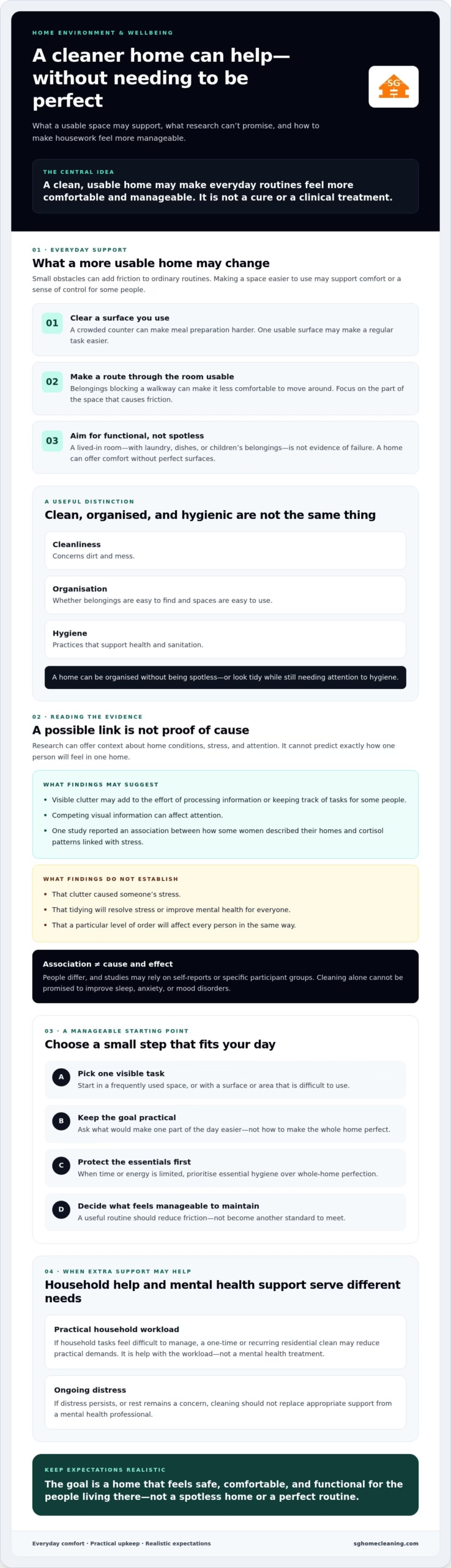
The mental health benefits of a clean house are best understood as possible everyday support, not a guaranteed clinical outcome. A clean, usable home may make daily routines feel more comfortable and manageable, but it isn’t a treatment for a mental health condition. Clutter and unfinished chores can feel like constant reminders of tasks waiting to be done. That can be burdensome, especially when time or energy is limited, and it isn’t a personal failing.
Cleanliness, organisation, and hygiene overlap, but they aren’t identical. Cleanliness concerns dirt and mess; organisation is about whether belongings are easy to find and spaces are easy to use; hygiene relates to practices that support health and sanitation. A home can be organised without being spotless, or appear tidy while still needing attention to hygiene.
Why the home environment can affect how a day feels
A crowded counter may make meal preparation harder. A walkway blocked by belongings may make it less comfortable to move through a room. These small obstacles can add friction to ordinary routines. The field of environmental psychology considers how physical surroundings interact with people’s behaviour and experiences. At home, a usable space or completing one visible task may support comfort or a sense of control for some people. Responses differ, though; a particular level of order won’t affect everyone in the same way.
A clean home is not the same as a perfect home
A useful standard is a home that feels safe, comfortable, and functional for the people living there. That might mean keeping essential areas usable and addressing hygiene needs, while accepting that laundry, dishes, or children’s belongings will appear during normal daily life. A lived-in room isn’t evidence that anyone has failed. Spotless surfaces and perfectly arranged rooms aren’t necessary for a home to offer comfort.
Instead of judging the whole home against an ideal, consider what would make one part of the day easier. Is there a surface you need for a regular task, or a space that’s difficult to use? Naming a practical need can help separate useful upkeep from pressure to make everything look perfect. The aim is to make the home work better for its occupants, not to eliminate every sign of activity.
What Research Can and Cannot Say About Clutter, Stress, and Focus
Studies suggest a possible connection between the home environment and how people experience stress or focus, but they don’t show that cleaning causes better mental health for everyone. The mental health benefits of a clean house should be understood as potential everyday support, not a predictable result or a clinical treatment.
Possible links between visual clutter and mental load
Cognitive load is the effort your mind uses to process information, make decisions, and keep track of tasks. Visible clutter may add to that effort for some people, especially if it makes belongings harder to find or draws attention away from what they’re doing. Princeton University researchers have studied how competing visual information can affect attention, but that doesn’t mean every untidy room will reduce someone’s focus.
A study published in the Personality and Social Psychology Bulletin reported an association between how some women described their homes and cortisol patterns linked with stress. The finding doesn’t prove that clutter caused the stress, or that tidying would resolve it. Highland Community College also offers a summary of the topic, noting that research shows that disorganization can worsen mental health. Treat such summaries as context, not proof that one approach works for everyone.
In brief: Research can point to links between home conditions and stress or attention, but an association doesn’t establish cause and effect. People differ, and studies may rely on self-reports or specific participant groups. Their results can’t predict exactly how a particular person will feel in a particular home.
Sleep, comfort, and a sense of control
A bedroom that feels comfortable and easy to use may help create a more restful setting, and a manageable home routine may offer a sense of control. Still, sleep is affected by many factors, including health, stress, daily habits, and the sleep environment. There isn’t enough basis here to promise that cleaning alone improves sleep quality, anxiety, or mood disorders. If rest or distress remains a concern, cleaning shouldn’t replace appropriate professional support.
If household tasks feel difficult to manage, practical help may reduce the workload without making claims about treatment. You could ask about weekly or one-time cleaning options and confirm the service scope that fits your home.
Can Cleaning Reduce Stress or Become Another Source of Pressure?
Cleaning can sometimes make a practical difference: clearing one surface may make it easier to prepare a meal or find what you need. But it can also feel draining, especially when energy is low or other demands take priority. The mental health benefits of a clean house aren’t guaranteed, and a spotless home isn’t a measure of someone’s effort, character, or wellbeing.
A supportive cleaning routine may make daily life more manageable; mental health treatment addresses emotional or psychological concerns with qualified care. One cannot replace the other. Cleaning isn’t a cure for a mental health condition, and it shouldn’t be treated as a substitute for professional support.
When cleaning feels helpful, and when it does not
A small task, such as putting away items that block a frequently used space, may offer immediate practical relief. Keep the task proportionate to your available time and energy. Disability, pain, caregiving responsibilities, work, and other pressures can all affect what feels possible. If a routine adds strain, brings up distress, or becomes difficult to stop, pause or adapt it. You don’t need to push through to prove anything.
When extra support may matter more than a cleaning routine
If distress is persistent or interferes with everyday activities, consider speaking with a qualified mental health professional. If you or someone else is in immediate danger, seek urgent help through local emergency services. A cleaning service may reduce household chores, but it cannot assess or treat mental health concerns. Practical help and professional care serve different purposes, and someone may need one, both, or neither.
For household tasks that feel hard to take on alone, SG Home Cleaning offers weekly and one-time residential cleaning options in Singapore. You can ask about the service scope to see whether either option fits your practical needs. It’s support with chores, not healthcare.
Build a Calmer Home With Small, Sustainable Cleaning Steps
A routine is more likely to fit everyday life if it starts with what you need, not an ideal of a spotless home. The mental health benefits of a clean house, if you experience them, don’t depend on finishing every chore. Focus on useful spaces and essential hygiene, then adjust the plan around your energy, responsibilities, and household.
A simple reset for days when energy is limited
Try this flexible reset. Stop when the task or time limit ends, even if the rest of the room still needs attention.
- Pick one visible task. Choose something that would make a frequently used space easier to use, such as clearing a small section of a table or gathering laundry in one place.
- Set a realistic limit. Decide how long you’re willing and able to spend. A short effort is enough if that’s what works today.
- Prioritise essentials. Give attention to the tasks that matter most for everyday use and hygiene before less urgent tidying.
- Share or pause. If you live with others, agree on a manageable division of household tasks. If you’re tired or the routine adds pressure, stop and try another time.
Progress is personal. A space that works better for you is a useful outcome, even if it doesn’t meet someone else’s standard.
When professional home cleaning could ease the practical workload
If household upkeep is difficult to manage, professional cleaning is one optional way to reduce the practical workload. Recurring help may suit people who want support with ongoing upkeep, while a one-time clean may be worth considering for a particular reset or busy period. These are household support options, not mental health interventions. Explore the weekly cleaning service and one-time house cleaning services to compare the options.
Choose support that fits your home and circumstances
Before enquiring, consider which tasks you want help with and check that they fit the service scope. Needs vary by household, so clarify details rather than assuming specific tasks are included. SG Home Cleaning offers residential cleaning in Singapore, with a clear scope for each service. You can enquire about whether weekly or one-time support may suit your practical needs.
Choose a Home Routine That Works for You
The mental health benefits of a clean house may include greater everyday comfort and fewer practical obstacles, but they aren’t guaranteed, and a tidy space isn’t a substitute for mental health care. Research can suggest links between home conditions, stress, and focus, but it can’t promise how any one person will feel.
Start with one useful task in a frequently used space, and let function matter more than appearance. Share chores where possible, adapt the routine to your energy, and pause if cleaning becomes another source of pressure. A small step that makes daily life easier is enough.
If household tasks feel difficult to manage, SG Home Cleaning offers weekly and one-time home cleaning options in Singapore. Its locally trained cleaners work to a clear service scope, which you can confirm before enquiring. This is practical help with chores, not mental health treatment.
Choose the kind of support that fits your circumstances. Your home doesn’t need to be perfect to feel more workable.
Frequently Asked Questions
Can a clean house improve mental health?
A cleaner, more functional home may make everyday tasks easier or reduce distractions for some people, but the effect varies. The mental health benefits of a clean house aren’t guaranteed, and research doesn’t show that cleaning will improve everyone’s mental health. Focus on changes that make your space more comfortable and manageable, such as keeping a frequently used surface clear. A tidy home is not a treatment for a mental health condition, and perfection isn’t required.
How does clutter affect stress and focus?
Clutter may make a space feel visually busy or harder to use, adding friction to daily tasks for some people. It shouldn’t be described as the sole cause of stress or concentration problems, since people and circumstances differ. Research findings may show an association without proving that clutter caused an outcome. Try clearing one practical area, such as a table used for meals, and notice whether it makes that task easier for you.
Can cleaning help with anxiety or depression?
Cleaning may ease a practical burden or make a room more comfortable, but it can’t diagnose, prevent, or treat anxiety or depression. Finding chores difficult isn’t a personal failure; health, energy, and life circumstances can all affect what feels manageable. If symptoms persist or interfere with daily life, speak with a qualified mental health professional. Practical cleaning help may reduce household tasks, but it isn’t a substitute for professional care.
What should I clean first when my house feels overwhelming?
Start with one small area that affects daily comfort or function. For example, clear a frequently used surface or make a walkway easier to use. Pick a task that fits your available energy and time, and stop once you’ve completed what you planned. You don’t need to tackle the whole home at once. If the workload remains difficult, consider sharing tasks with others or getting practical help.
How often should I clean to support wellbeing?
There’s no single cleaning schedule that supports everyone’s wellbeing. Choose a routine based on household needs, available time, health, and personal preferences. Prioritise essential hygiene and spaces you use often, then adjust if the routine feels too demanding. Cleaning should help make daily life more manageable, not become another strict standard. If your circumstances make household tasks difficult, consider sharing responsibilities or seeking practical support.
Can hiring a cleaner help if I feel overwhelmed by housework?
A professional cleaner can take some household tasks off your list, which may make upkeep more manageable, but it doesn’t guarantee a change in mood or replace mental health care. Before booking, check the service scope and clarify which tasks matter most to you. SG Home Cleaning offers weekly and one-time residential cleaning options in Singapore, with locally trained cleaners and a clear scope for each service. Consider the option that fits your needs and circumstances.