
You might think that a standard mop and a high-end household vacuum are enough to tackle the aftermath of your home makeover, but using them on construction debris is often the fastest way to damage your new floors and your appliances. It’s incredibly frustrating to spend hours scrubbing only to find a layer of fine white dust reappearing on your surfaces the next morning. You’ve invested a significant amount of money into your renovation, and the last thing you want is to scratch your custom carpentry or clog your vacuum filter with abrasive plaster particles. This is why a specialized approach to hdb post renovation cleaning is essential for every homeowner in Singapore.
You’re about to master a systematic process for eliminating stubborn construction dust using professional-grade techniques that ensure your home is truly safe for your family and children. We’ll guide you through a methodical “top-down, dry-to-wet” protocol that captures microscopic particles instead of just moving them around, helping you achieve a move-in ready state quickly. By following this disciplined guide, you’ll protect your new fixtures and ensure your living space is as healthy as it is beautiful.
Key Takeaways
- Learn why construction dust is so persistent and how its microscopic size requires a specific “top-down” cleaning strategy to prevent it from settling back onto surfaces.
- Discover the hidden “dust traps” unique to Singaporean flats, such as HDB bomb shelter vents and sliding door rails, which are often missed during a standard cleanup.
- Master the professional-grade techniques of hdb post renovation cleaning to eliminate abrasive debris that can permanently scratch your new carpentry and flooring.
- Understand why industrial HEPA-equipped vacuums are necessary for construction silica, as standard household models often clog or lose suction when facing fine masonry dust.
- Identify when the scale of the job, which can take over 15 man-hours for a 5-room flat, warrants the efficiency and equipment of a specialized professional team.
Understanding Construction Dust Removal in Singapore HDBs
Construction dust is a complex cocktail of silica, cement, drywall particles, and fine wood sawdust. Unlike the organic matter often discussed when asking What is dust?, construction debris is inorganic and significantly more abrasive. These particles are microscopic, often ranging from 1 to 100 microns in size. Because they’re so light, they can remain airborne for several days after the contractors have left. This is why you often find a fresh layer of white powder on your sideboard even after you’ve just wiped it down.
Handling this debris incorrectly poses a major risk to your new home’s finishes. If you attempt to sweep or mop without first removing the bulk of the particles through a dry-capture method, you’re essentially using liquid sandpaper on your brand-new vinyl or parquet flooring. Standard domestic vacuums usually exacerbate the problem. Without industrial-grade HEPA filtration, these machines often suck up the fine dust only to blow the smallest particles back out through the exhaust, redistributing the mess across your ceiling and walls. Professional hdb post renovation cleaning focuses on capturing these particles at the source rather than just moving them around. Before you begin, it’s worth understanding the common myths about after renovation cleaning service that lead many homeowners to underestimate the scope of the task.
The Health Risks of Lingering Reno Dust
The enclosed nature of Singaporean HDB flats means that particulates have nowhere to escape. Silica dust is a fine mineral particulate found in materials like concrete, bricks, and mortar, and it is a nearly universal byproduct of Singaporean masonry and tiling works. These fine particles are significant respiratory irritants. For children, the elderly, or pets who spend time closer to the floor, lingering dust can trigger asthma or persistent coughing. Ensuring a dust-free environment isn’t just about aesthetics; it’s a fundamental safety requirement before your family moves in.
Standard vs. Post-Renovation Cleaning
Regular household maintenance is designed to manage organic buildup like skin cells and lint. In contrast, post-renovation work requires a “deep capture” strategy. This often involves specialized chemicals to neutralize “cement bloom,” that stubborn white haze that appears on newly laid tiles. This type of project falls into a distinct category of service because it requires industrial equipment and a systematic approach to reach the internals of built-in carpentry where dust hides. It’s a one-time project that sets the foundation for all your future weekly maintenance. If you live in a private property, the same principles apply — you can find a detailed breakdown in this step-by-step condo cleaning service Singapore guide that covers the top-down extraction process used by specialists.
A Step-by-Step Guide to Construction Dust Removal
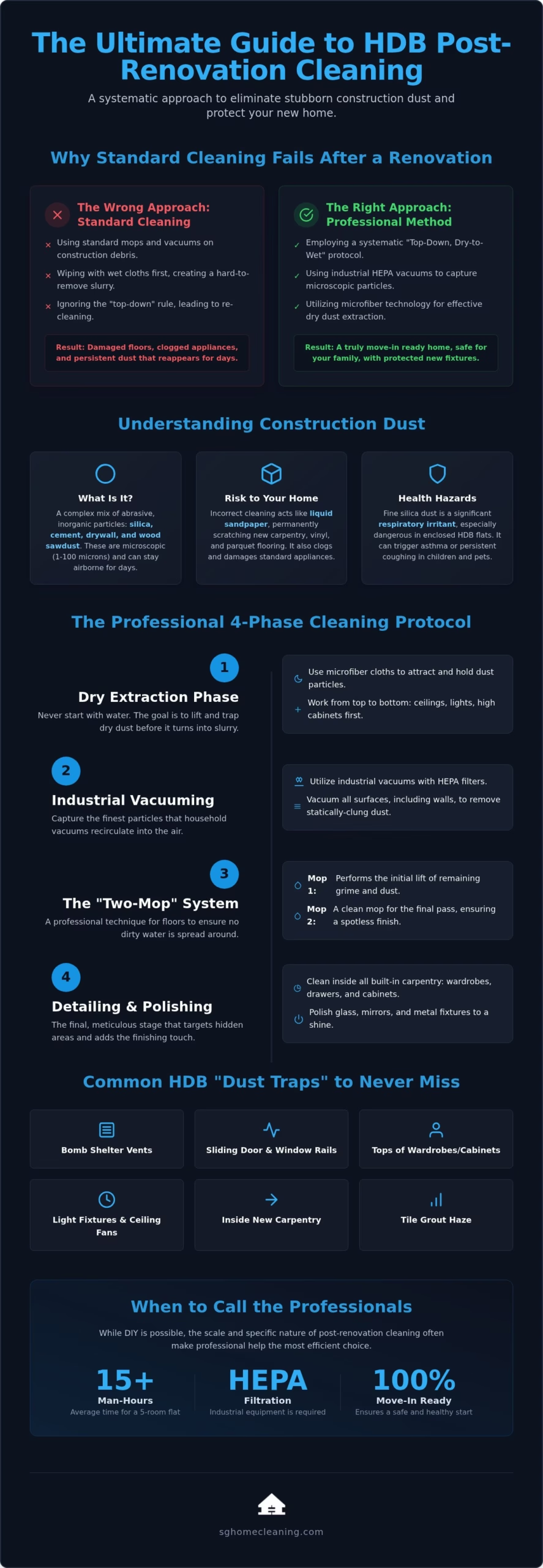
Successful cleaning begins with a single golden rule: always work from the top of the room to the bottom. By beginning with the ceiling, fans, and light fixtures, you allow gravity to pull any dislodged particles downward onto surfaces you haven’t cleaned yet. This prevents the frustration of dust settling on a floor you’ve just mopped. Professional hdb post renovation cleaning is a methodical four-phase process designed to capture debris rather than just shifting it around.
Phase one involves high-level dry dusting. Phase two transitions into industrial-grade vacuuming of all vertical and horizontal surfaces, including the walls. Many homeowners forget that dust clings to wall paint through static electricity. Phase three introduces the “Two-Mop” system for flooring. This technique uses one mop for the initial lift and a second, clean mop for the final pass to prevent cross-contamination. Finally, phase four focuses on the details: the internals of built-in carpentry and the polishing of fixtures. While government construction safeguards are in place to manage the environmental impact of works, the final responsibility for a dust-free interior rests on a disciplined cleaning sequence.
Step 1: The Dry Extraction Phase
It’s vital that you never start with a wet cloth on heavy construction dust. Mixing fine silica or cement dust with water creates a thin “mud” or slurry that is incredibly difficult to remove once it streaks across a surface. Instead, use microfiber technology to lift and trap the particles. Microfiber cloths have a massive surface area that grips debris. Pay special attention to the tops of built-in wardrobes and kitchen cabinets. If you find the scale of these high-level areas overwhelming, you can enquire about professional cleaning assistance to ensure no corner is overlooked.
Step 2: The Wet Sanitization Phase
Once the bulk of the dry dust is gone, you can move to wet sanitization. You must select the right cleaning agents for your specific HDB materials. Quartz countertops require neutral cleaners, while certain laminates can be sensitive to harsh chemicals. The secret to a streak-free finish is frequent water changes. If your bucket water looks cloudy, you’re simply spreading cement residue back onto your surfaces. This phase includes wiping down the internals of every drawer and shelf to ensure your clothes and kitchenware stay pristine.
HDB-Specific “Dust Traps” and How to Clean Them
HDB flats have specific architectural features that act as magnets for fine construction debris. While surfaces like countertops are obvious, the real challenge of hdb post renovation cleaning lies in the “hidden zones” that are easily overlooked. These areas aren’t just messy; they’re functional components where grit can cause long-term mechanical damage. Identifying these traps early prevents the frustration of finding white powder weeks after you’ve moved in.
Window tracks and sliding door rails are the primary collection points for heavy cement dust and masonry shards. If these aren’t cleared, the abrasive grit will eventually grind down the rollers and tracks, leading to jammed doors. Contractors are expected to manage hazards under the Workplace Safety and Health Act, but fine particles often settle long after the site is handed over. You’ll need to be meticulous here to avoid permanent scratches on the aluminum frames.
The HDB bomb shelter vents are another notorious trap. Because they’re located high up and often behind doors, they’re frequently forgotten during the initial sweep. Similarly, fine particles can enter electrical sockets and distribution board (DB) boxes. Cleaning these requires a safety-first approach, using dry brushes or specialized vacuums to ensure no moisture enters the circuits. Taking the time to address these small details ensures your home is truly move-in ready.
Tackling the Window Tracks
Start by using a stiff-bristled brush to dislodge packed debris from the corners. A standard vacuum nozzle is usually too wide, so you’ll need a specialized crevice tool to reach deep into the rails. For stubborn construction sludge that has hardened, a “wet-vac” technique works best. Apply a small amount of cleaning solution to loosen the grime, then immediately vacuum it up before it can settle into the drainage holes and cause a blockage.
Cleaning Built-in Carpentry Internals
It’s a common misconception that dust can’t enter “sealed” cabinets. During the heavy sanding of flooring or walls, microscopic particles penetrate even the smallest gaps in joinery. A thorough post-renovation cleaning service includes a systematic wipe-down of all hinge mechanisms. If grit remains in the hinges, you’ll notice a grinding sound or resistance when opening doors, which eventually leads to premature wear and tear on your custom carpentry.
When to Hire Professional Post-Renovation Cleaners
Deciding to tackle the final cleanup yourself is often a matter of underestimated scale. For a standard 4-room or 5-room HDB flat, removing construction dust effectively can easily take over 15 man-hours of meticulous labor. This isn’t just about time; it’s about the physical toll of repetitive scrubbing and the technical difficulty of managing microscopic particulates. Professional hdb post renovation cleaning provides the workforce and expertise to condense this massive task into a single, efficient session.
A major differentiator is the equipment advantage. Domestic cordless vacuums are engineered for household maintenance, not for the heavy silica and masonry debris left behind by contractors. These consumer models often lack the suction power and filtration capacity required for construction sites, leading to clogged filters or even motor burnout. Professionals utilize industrial-grade HEPA vacuums that trap 99.97% of particles, ensuring that the air you breathe is as clean as the surfaces you see. This specialized gear is also essential for solving the “cement bloom” problem. If your new tiles still look hazy after five rounds of mopping, it’s because you’re likely spreading a thin layer of cement residue rather than neutralizing it. Many homeowners fall into this trap due to widespread misconceptions — reading about the most debunked myths surrounding after renovation cleaning service can help you avoid costly mistakes before you start. Professional crews use specific chemical balances to remove this haze without damaging the tile finish. Condo owners dealing with the same challenges can refer to this comprehensive guide on professional condo cleaning service in Singapore for techniques specifically tailored to private residential properties.
The Value of Locally Trained Crews
Locally trained teams bring a deep understanding of standard HDB materials, from the porous nature of cement screed to the specific care required for vinyl overlays. They know exactly how these materials react to different cleaning agents, ensuring your new home isn’t accidentally damaged during the final stage. This level of expertise is often what bridges the gap between a “clean” house and a truly ready-to-occupy home. If you’ve already moved your furniture in, you might consider a move-in cleaning service to maintain that pristine standard.
Securing Your Move-In Timeline
Your move-in timeline is often a delicate balance of furniture deliveries and utility setups. A professional cleanup ensures there are no delays caused by lingering dust that could soil new upholstery or bedding. By receiving a documented scope of work and a clear completion time, you can coordinate your logistics with total confidence. It’s the final step in protecting the significant investment you’ve made in your renovation. Ensuring the home is truly safe for move-in means you can start your new chapter without the stress of hidden grit or airborne irritants.
Book your post-renovation clean with SG Home Cleaning
Transitioning From Construction Site to Sanctuary
Achieving a truly dust-free home requires moving beyond standard household tools. You’ve learned how microscopic silica and cement particles can linger for days, making a systematic “top-down” approach and industrial HEPA filtration essential. By identifying HDB-specific traps like bomb shelter vents and window tracks, you protect your new carpentry and flooring from the abrasive damage that fine grit causes. This methodical attention to detail is the final step in ensuring your renovation investment is preserved.
SG Home Cleaning brings a sense of order to your move-in journey. With over 2,000+ homes cleaned across Singapore, our locally trained professional cleaners follow a transparent scope of work designed specifically for HDB layouts. We handle the heavy lifting and technical challenges of hdb post renovation cleaning so you don’t have to spend your first weekend in your new flat scrubbing away stubborn cement bloom. Our goal is to provide the quiet competence and meticulous care needed to make your living space safe and healthy.
You’ve invested significant time and resources into designing your ideal home. Now it’s time to enjoy it without the stress of lingering construction debris. Let us help you cross the finish line so you can start making memories in a pristine, move-in ready environment.
Frequently Asked Questions
How long after renovation can I start cleaning?
Wait at least 24 to 48 hours after all renovation works are finished before starting the process. This timeframe allows fine particles that are still suspended in the air to settle completely onto floors and surfaces. If you begin the hdb post renovation cleaning too early, you’ll likely find a fresh layer of white powder appearing the very next morning. Gravity needs time to pull those microscopic particles down.
Is construction dust dangerous for my family?
Construction dust is a significant respiratory irritant that can cause health issues if it’s not handled correctly. Materials like concrete and mortar release silica, which is hazardous when inhaled. For families with young children, the elderly, or pets, these fine particles can trigger asthma or persistent coughing. Ensuring a thorough removal process is a fundamental safety requirement before you begin moving your personal belongings into the flat.
Why does the white dust keep coming back after I mop?
White dust reappears because standard mopping often creates a thin “slurry” of cement residue rather than removing it. When you use a regular mop on fine masonry dust, the water suspends the particles and spreads them evenly across the floor. Once the water evaporates, the particles remain as a hazy film. Solving this requires a systematic dry extraction followed by multiple water changes and specialized neutralizing agents.
What is the difference between a spring clean and post-renovation cleaning?
The primary difference lies in the nature of the debris and the equipment required to capture it. While a spring clean handles organic grime like grease and lint, hdb post renovation cleaning targets inorganic, abrasive particles like silica and wood dust. This requires industrial HEPA vacuums that prevent fine dust from being blown back into the air, a common failure point for domestic vacuum models used during regular maintenance.
Do I need to provide cleaning supplies for the professionals?
You don’t need to provide any supplies when hiring a professional team. Specialized services bring their own industrial-grade vacuums, microfiber technology, and chemical agents designed to neutralize cement bloom. Using domestic cleaning tools on a renovation site is often counterproductive, as construction debris can easily clog or damage standard household appliances. A professional setup ensures the job is done correctly without risking your personal equipment.
Can I stay in the house while the post-reno cleaning is being done?
It’s highly recommended that you stay away from the flat while the cleaning is in progress. The process of dislodging settled dust from high-level areas and window tracks temporarily increases the concentration of airborne particulates. For your own comfort and health, it’s best to return only after the air has cleared and the surfaces have been fully sanitized. This ensures your first experience in the home is pleasant and safe.