
What if the dust you can’t see is why your freshly cleaned home still feels gritty days later? After renovation, fine particles can settle on shelves, cling to new finishes and become airborne again when disturbed. For homeowners searching for construction dust removal singapore, repeated wiping can be frustrating. It may also spread dust or scratch delicate surfaces if you use the wrong tools.
A quick sweep and mop may seem like the easiest solution after renovation, but fine dust needs a more systematic approach. Capture it carefully, clean surfaces in sequence and pay attention to places where particles collect or circulate. This can help reduce lingering dust while protecting new appliances and finishes.
This guide explains how to tackle renovation dust safely, why some household tools may fall short and how to prepare your HDB flat, condo or landed home for a final clean. A professional post-renovation clean can take the detailed work off your hands before you move in.
Key Takeaways
- Renovation residue from materials such as silica, drywall, wood and cement can be difficult to see and easy to disturb.
- Work from top to bottom, room by room, to reduce the chance of dust settling on surfaces you have already cleaned.
- Ordinary vacuums and brooms may leave fine particles behind or send them back into the air during construction dust removal singapore.
- After major hacking, sanding or masonry work, a thorough post-renovation clean can prepare your home for move-in.
- A trained cleaning team can make the final clean more manageable after a demanding renovation.
What is Construction Dust and Why is it Dangerous?
Construction dust is produced when renovation materials such as concrete, drywall, wood and cement are cut, drilled, sanded or demolished. It ranges from visible debris to microscopic particles that are difficult to spot and easy to inhale.
Unlike everyday household dust, renovation residue can contain sharp, abrasive mineral particles and material-specific contaminants. A fine layer on a shelf may look harmless, but wiping it with the wrong cloth can drag grit across a new finish. The Dust Abatement Methods overview explains why controlling dust at its source and capturing it carefully matter.
The Health Risks of Post-Reno Particles
Some renovation materials, including concrete and cement, can produce respirable crystalline silica when cut or ground. Inhaling fine silica dust can cause serious, long-term lung disease, including silicosis. Drywall and wood particles can also irritate the airways, while dust on bedding, furniture or skin may trigger eye or skin irritation. Avoid disturbing a dusty room unnecessarily, especially before it has been cleaned.
Why Dust Doesn’t Simply Settle
Particles that land on a surface haven’t necessarily been removed from the home. Walking through a room, opening doors, switching on a fan or running air conditioning can disturb settled dust and move it elsewhere. This is why dust may seem to return after a quick wipe. Dry sweeping or shaking out cloths can put more particles into the air instead of capturing them.
Impact on Home Appliances and Systems
Fine dust can collect in air-conditioning filters and restrict airflow, which may reduce cooling efficiency. Particles entering electronic devices can obstruct ventilation and contribute to overheating. Depending on the device and conditions, dust buildup may also contribute to electrical faults. Switch appliances off before cleaning around them, and don’t spray liquid into vents or controls.
Ceiling fans and sliding tracks also need attention. Fans can redistribute settled particles when switched on, while dust in tracks can transfer to hands, curtains or moving panels. Include these areas in a systematic post-renovation cleaning service. Careful construction dust removal singapore helps prepare HDB flats, condos and landed homes for move-in.
Step-by-Step Guide to Effective Construction Dust Removal
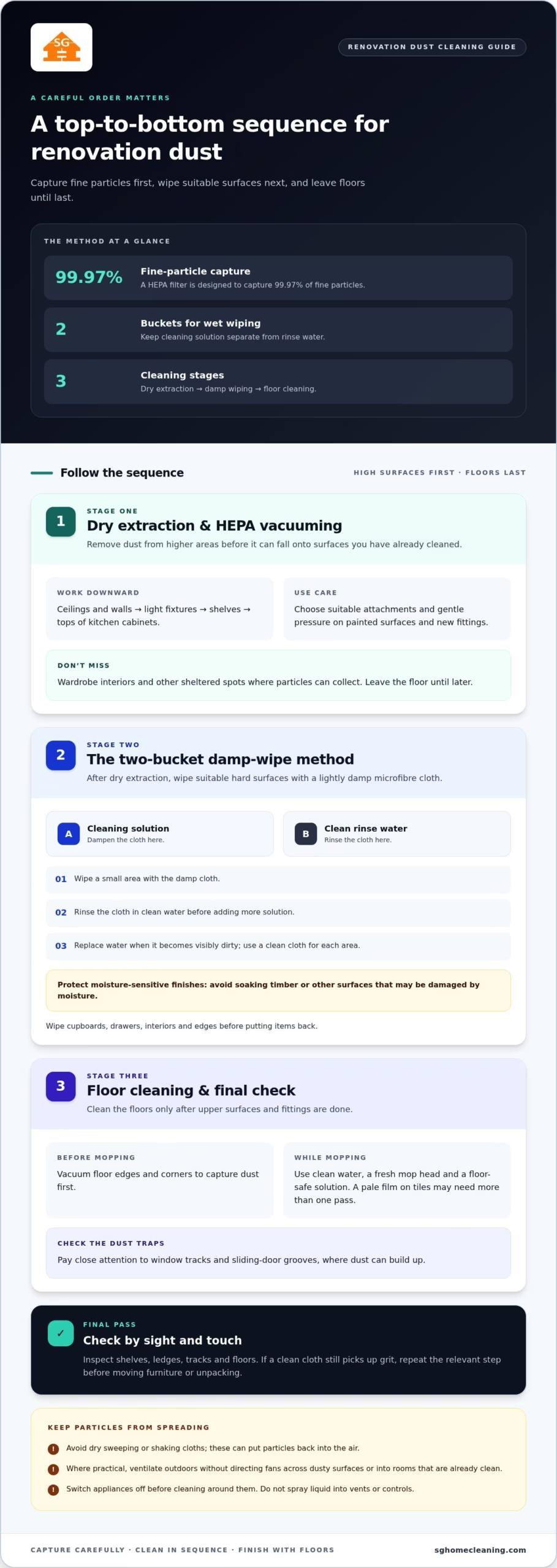
Follow a consistent order: remove dust from higher surfaces first, capture particles rather than scattering them, then clean the floors. This top-to-bottom sequence helps prevent dust from falling onto areas you have already cleaned. Where possible, keep doors to untreated rooms closed and use separate cloths for different areas. Ventilate outdoors when practical, but don’t direct fans across dusty surfaces or into rooms that are already clean.
Stage 1: Dry Extraction and HEPA Vacuuming
Begin with a vacuum fitted with a HEPA filter, which is designed to capture 99.97% of fine particles. Work from ceilings and walls down to light fixtures, shelves and the tops of kitchen cabinets. Use suitable attachments and gentle pressure, especially on painted surfaces and new fittings. Leave the floor until later, since dust from higher areas may fall during cleaning. Check wardrobe interiors and other sheltered spots where particles can collect.
Stage 2: The Multi-Bucket Wet Wipe Method
After dry extraction, wipe suitable hard surfaces with a lightly damp microfibre cloth. Its fibres help pick up dust instead of pushing it along. A two-bucket setup keeps cleaning solution separate from rinse water: dampen the cloth in the solution, wipe a small area, then rinse it in clean water before adding more solution. Replace the water when it becomes visibly dirty, and avoid soaking timber or other moisture-sensitive finishes.
Clean cupboards and drawers as well as exposed surfaces. Wipe their interiors and edges before putting items back. Use a clean cloth for each area to limit cross-contamination.
Stage 3: Floor Sanitisation and Final Polish
Once upper surfaces and fittings are clean, vacuum floor edges and corners before mopping. A pale film on tiles may need more than one pass to lift. Use clean water and a fresh mop head rather than spreading residue around. Pay close attention to window tracks and sliding-door grooves, where dust can build up. Choose a floor-safe cleaning solution and follow the surface-care instructions.
Finish by checking shelves, ledges, tracks and floors visually and by touch. If a clean cloth still picks up grit, repeat the relevant step before moving furniture or unpacking. For a more hassle-free final clean after renovation, explore post-renovation cleaning support. A careful sequence is central to effective construction dust removal singapore.
Why Standard Cleaning Methods Fail Against Renovation Dust
Routine home cleaning is designed for everyday dirt, not the fine, gritty residue left by cutting, sanding or masonry work. Household tools may remove visible debris but miss particles lodged in corners, grooves and textured surfaces. A room can look clean, then feel dusty again after people walk through or the air-conditioning runs. The particles may have been disturbed or redistributed rather than fully captured.
The Limitation of Domestic Cleaning Tools
Many household vacuums aren’t designed to filter very fine construction particles. Dust that escapes the filter can return to the room, and fine drywall dust can strain or damage a standard vacuum’s motor. Brooms have a similar limitation: their bristles lift settled particles into the air, where they may land on furniture later.
Ordinary mops can spread cement or plaster residue across flooring, leaving a cloudy film, especially when the water or mop head is already dirty. Paper towels and standard rags may drag abrasive grit over a surface instead of holding it. On new laminate, glass or glossy joinery, that friction can leave scratches. Use a clean, soft cloth and test an inconspicuous area before wiping delicate finishes.
Why “Ghost Dust” Returns
Dust can seem to reappear after cleaning because fine particles remain on high ledges, inside tracks or in other missed areas. Air movement from fans, open doors or air conditioning can lift and redistribute them. A broom or dry cloth may add to the cycle by disturbing residue without extracting it. Effective construction dust removal singapore calls for methods suited to renovation debris, not just a standard maintenance clean.
The Importance of Industrial-Grade Equipment
Equipment designed to capture fine dust can be more suitable for renovation cleanup than a typical household vacuum. The cleaning method and solution also need to suit the residue and surface. For example, adhesive marks may need a suitable product and careful application, while clean microfibre cloths can lift particles from new joinery and help reduce streaks. A thorough post-renovation cleaning service addresses the difference between routine upkeep and a detailed renovation clean.
When to Hire a Professional Post-Renovation Cleaning Service
After major hacking, masonry work or extensive sanding, a professional clean is a practical final step before you move furniture and belongings into your home. Renovation can leave fine residue in places that are easy to miss during routine housework. A trained team can work through a clear scope systematically, with the time required depending on the home and the amount of dust.
Consider professional help if dust keeps returning after you clean, you’re short on time after an exhausting renovation, or children, older adults or people with allergies will be using the space. A thorough clean can reduce leftover dust on accessible surfaces, but it shouldn’t be treated as a guarantee that every health risk has been eliminated. Keep sensitive household members away from active cleaning and ventilate the home appropriately.
What to Expect from a Professional Scope
A clear post-renovation cleaning scope sets out which areas will be addressed. It may include built-in carpentry such as internal shelves, window frames, tracks and glass, as well as kitchens and bathrooms. Cleaning removes dust and visible residue from accessible surfaces. It shouldn’t be described as removing every chemical residue or correcting construction work. After the clean, inspect the home in good light, when marks or defects previously obscured by dust may be easier to see.
Saving Time and Supporting a Careful Handover
Leaving the detailed final clean to a team can ease the burden of an already demanding renovation and help you avoid repeating the same cleaning cycle. This is especially useful when fine dust is spread across multiple rooms or has collected inside cupboards and along window tracks. After cleaning, walk through the property and record any chipped finishes, uneven surfaces or other concerns for your handover notes.
For HDB flats, condos and landed homes across Singapore, SG Home Cleaning’s post-renovation cleaning service can be the organised final step before move-in. Locally trained cleaners follow a clear service scope, so you know what the clean covers and can focus on settling into your renovated home.
Make Your Renovated Home Ready for What Comes Next
Renovation may be finished, but a careful final clean helps your home feel ready for everyday life. A systematic approach to construction dust removal singapore can reduce repeat cleaning and give you a more comfortable starting point as you unpack and settle in.
SG Home Cleaning provides post-renovation cleaning for HDB flats, condos and landed homes across Singapore. Locally trained cleaners follow a clear service scope, so you know what the clean covers and can move towards handover with greater peace of mind.
Make the final stage of your renovation more manageable. Enquire about professional post-renovation cleaning and take the next step towards settling into your refreshed home.
Your renovated home is ready for a fresh start.
Frequently Asked Questions
Is it safe to sleep in a house with construction dust?
It’s best to avoid sleeping in a room where renovation dust is still visible or easily disturbed, especially if anyone has asthma, allergies or other breathing concerns. Keep bedding and clothing out until the room has been cleaned, and ventilate appropriately. If dust is present throughout the home, consider staying elsewhere until cleaning is complete. Anyone experiencing persistent breathing or eye irritation should seek medical advice.
How many times do I need to clean after a renovation to remove all dust?
There isn’t a fixed number of cleaning rounds that guarantees every particle is gone. The amount depends on the work completed, how widely dust spread and whether renovation activity is still taking place. Clean after dusty work has ended, then check high ledges, cupboard interiors and less-used rooms again before unpacking. If new dust appears, identify its source and clean the affected areas rather than repeatedly wiping the whole home.
Can I use my regular vacuum for construction dust removal?
For construction dust removal singapore, use a vacuum with suitable fine-particle filtration, such as a HEPA-filtered model, rather than assuming a regular household vacuum is adequate. Fine drywall dust may pass through some domestic filters or strain the machine. Check the vacuum’s manual before use, and stop if the filter clogs or the motor behaves unusually. Avoid vacuuming wet residue or material the manufacturer advises against collecting.
What is the difference between move-in cleaning and post-renovation cleaning?
Move-in cleaning prepares a home for occupation, while post-renovation cleaning addresses residue left by building or renovation work. A renovated home may need detailed attention to fresh dust and residue around new fittings, cabinetry and tracks. If renovation has just finished, choose a service intended for post-renovation conditions. For a home without recent renovation work, a move-in clean may better match the preparation needed before belongings arrive.
How long does a professional post-renovation cleaning take in Singapore?
Timing varies with the home’s size, the renovation work and the amount of residue, so there isn’t one reliable duration for every project. A compact home after light work will differ from a larger property after extensive hacking. Share relevant details about the property and renovation when requesting a quote, and plan move-in around the agreed scope rather than assuming the clean will take a set number of hours.
Should I clean the aircon filters after renovation?
Yes. Renovation dust can collect in air-conditioning filters, so switch the unit off and clean or replace filters according to the manufacturer’s instructions before regular use. Don’t operate the system while dusty work or cleaning is underway, as airflow may redistribute particles. If dust has entered the indoor unit or cooling seems reduced, filter cleaning alone may not address the issue. Follow the manufacturer’s servicing guidance, then clean surrounding surfaces afterward.